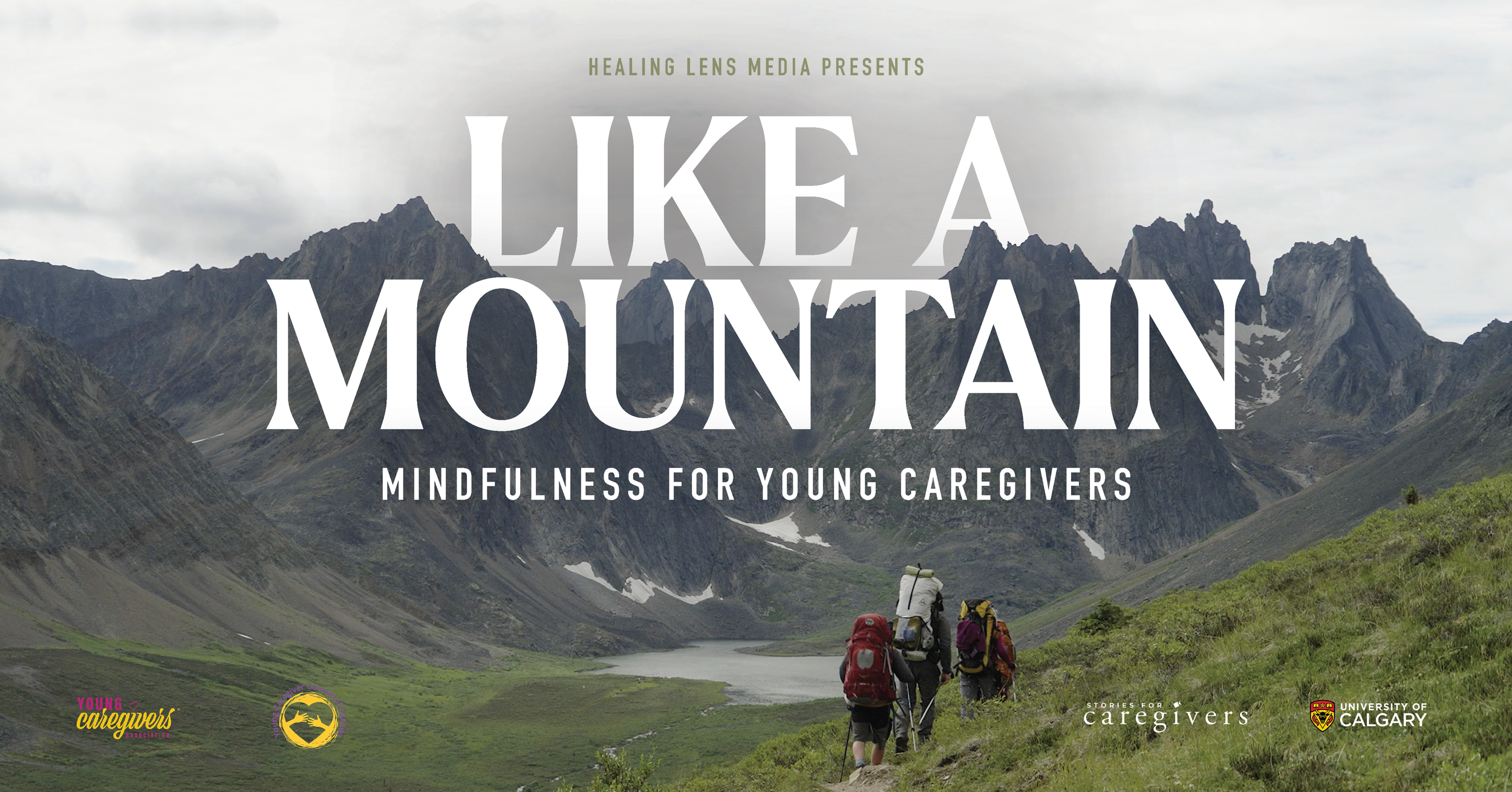
Amid the raw beauty of the Yukon wilderness, a young caregiver, a cancer survivor, and a mindfulness researcher and teacher embark on a journey that reveals how nature and mindfulness practice can transform the experience of being a young caregiver.
Watch the Trailer
Synopsis
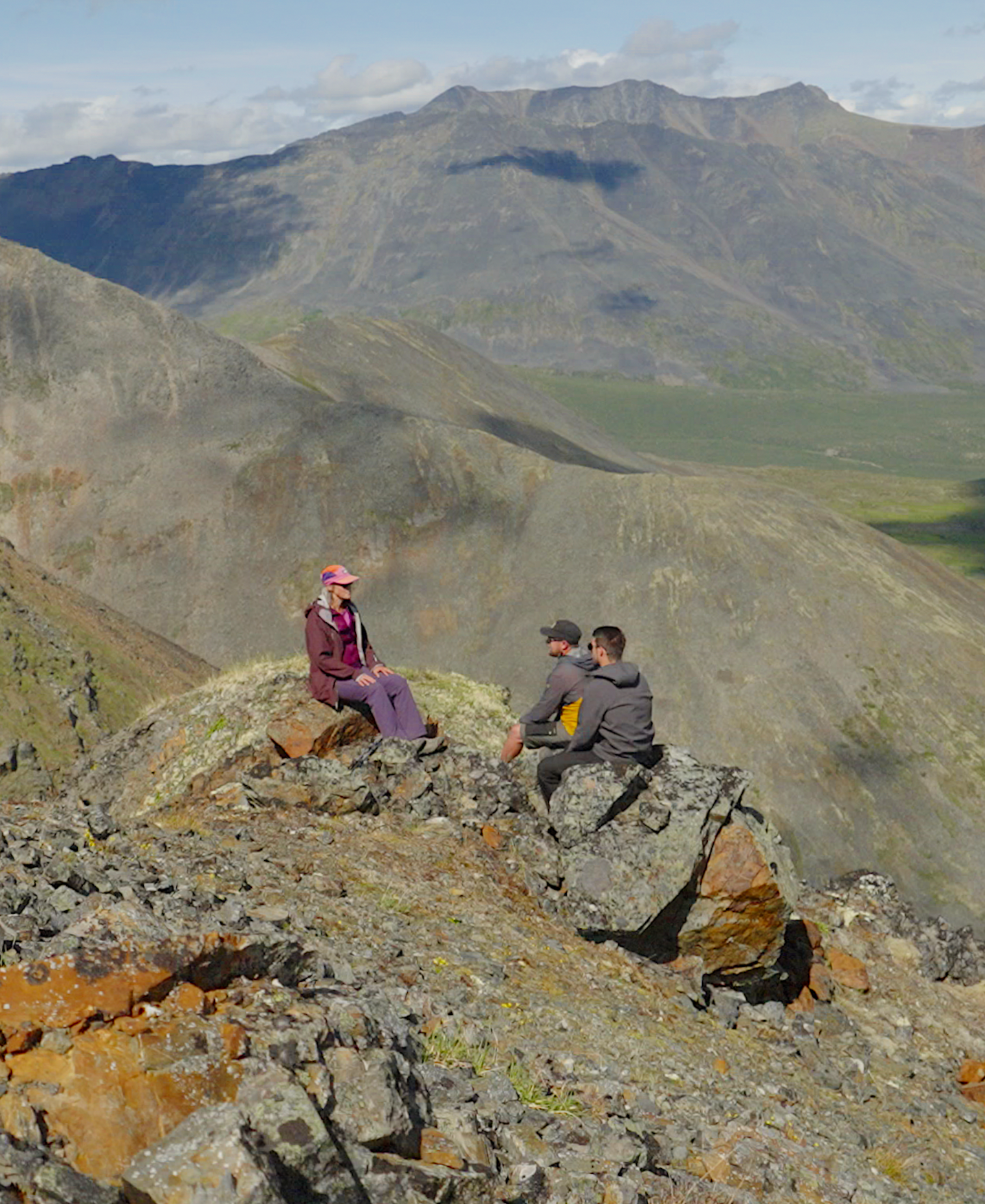
Like a Mountain is a 23-minute documentary film that follows a young caregiver, Sam, who has supported his father through schizophrenia since childhood, as he joins filmmaker and cancer survivor Mike Lang and mindfulness researcher Dr. Linda Carlson on a backcountry trek through the Yukon. Amid rugged trails and vast northern landscapes, they explore how mindfulness and the metaphors of nature offer guidance for carrying the physical and emotional weight of caregiving. Through candid reflection and shared practice, the film reveals the often hidden struggles and quiet resilience of young caregivers, and demonstrates how presence and acceptance can transform difficulty into strength.

Host A Screening
Watching and discussing the film is a great way to start meaningful conversations about the needs of young caregivers and to learn more about how mindfulness can be a helpful tool.
We can help you organize the logistics, technology, and resources (panel experts or curriculum guides) for your event. We will depend on you to promote your event to your community.
Please fill out the screening request form by clicking the button below so that we can help you ensure your screening is a huge success!

“Meditation practice is a microcosm for your entire life. Everything you struggle with in your life will arise in meditation practice, and it gives you an opportunity to respond in a different way.”
— Dr. Linda Carlson
About Young Caregivers
There are 1.5 million young caregivers (ages 15-30) in Canada who provide significant support for family members living with chronic illness, disability, mental health concerns, substance use, or socioeconomic barriers. Their responsibilities range from personal care and household tasks to emotional support and caring for siblings, all while juggling school, friendships, and discovering their own path as young adults.
These added responsibilities can lead young caregivers to experience social isolation, academic disruption, and mental and physical health challenges, but with adequate tools and support, many develop valuable interpersonal skills, personal resiliency, and a maturity that can lead to positive long-term outcomes in their lives. Mindfulness practices have been shown to help caregivers tolerate uncertainty, reduce stress, and reconnect with meaning, offering a powerful tool for enhancing the resilience of young caregivers.
Like a Mountain aims to deliver evidence-based mindfulness concepts to young caregivers through a compelling narrative that is accessible, experiential, and grounded in lived experience.
About Mindfulness
What is Mindfulness?
Mindfulness is defined as paying attention, on purpose, in the present moment to everything happening both inside and outside of yourself, with a nonjudgmental, curious and kind attitude.
Mindfulness is both a WAY OF BEING in the world, and also a PRACTICE.
Mindfulness as a Way of Being
You can be more or less present in your life (i.e. mindful; paying attention) no matter what you are doing. It doesn’t take extra time to live your life mindfully. It just means making an effort to bring your mind into the present moment during your day (rather than dwelling in the past or worrying about the future), and applying mindfulness attitudes, such as:
Nonjudgement - Things are not good or bad; they just are as they are
Kindness - Towards self and others
Curiosity - Seeing things with a “beginners mind”
Patience - Allowing things to unfold naturally over time
Acceptance - Recognizing things you cannot control and accepting them (Important: You can accept things you don’t like)
Nonstriving - Letting go of struggling to achieve certain outcomes
Nonattachment/Letting Go - Recognizing that the only certainty in life is change, letting go of things you cannot change; ceasing to struggle against natural forces of change; learning to “ride the waves”
Mindfulness as a Practice
The structured formal practice of mindfulness meditation and related practices strengthen the mindfulness “muscle” – they develop the capacity in the brain to be more mindful in daily life.
In structured mindfulness training programs like MBSR (mindfulness-based stress reduction), people usually attend group meetings weekly, and practice various forms of meditation at home daily for anywhere from 10-40 minutes each day. Typical practices include body scan, sitting meditation, walking meditation, mindful movement, loving kindness meditation and open awareness.
Building the skill of mindfulness is like learning any other skill (e.g. hockey, piano) – you need to practice it regularly to become more skilled. Then you can more easily apply these mindfulness skills to everyday life.
The mindfulness attitudes are applied in both the FORMAL practice, and the INFORMAL application of mindfulness as a way of being.
Online Mindfulness Resources recommended by Dr. Carlson
-
![]()
Based out of Toronto, this website features audio and video meditations, recommended readings, latest research updates, and information about retreats and mindfulness groups.
-
![]()
The UC San Diego Center for Mindfulness has prepared a number of practices that are available here in MP3 format.
-
![]()
Founded by John Kabat-Zinn is a multi-faceted program of professional training, education, research and outreach intended to further the practice and integration of mindfulness into all aspects of society. The website features tools that range from exercises in mindful eating to continued online mindfulness programs, along with current MBSR research.
-
![]()
All-in-one resource for self-compassion. Official website for Dr. Kristin Neff, pioneering self-compassion researcher, author, and teacher. Website includes exercises and reading resources.
-
![]()
The Center for Mindful Self-Compassion is devoted solely to disseminating self-compassion. Self-compassion can be defined as learning to treat yourself the way you would treat a good friend when they suffer, fall short or fail in some way.
-
![]()
This online MBSR training course is 100% free, created by a fully certified MBSR instructor, and is based on the program founded by Jon Kabat-Zinn at the University of Massachusetts Medical School.
-
![]()
This website provides a series of free mindfulness-based stress reduction recordings that are free for you to download. By downloading these pre-recorded classes you can use them just about anywhere, by saving them on your device.

Recommended Mindfulness Apps





Click on the logos below to
Learn More about Our Partners
Impact Campaign Planning provided by